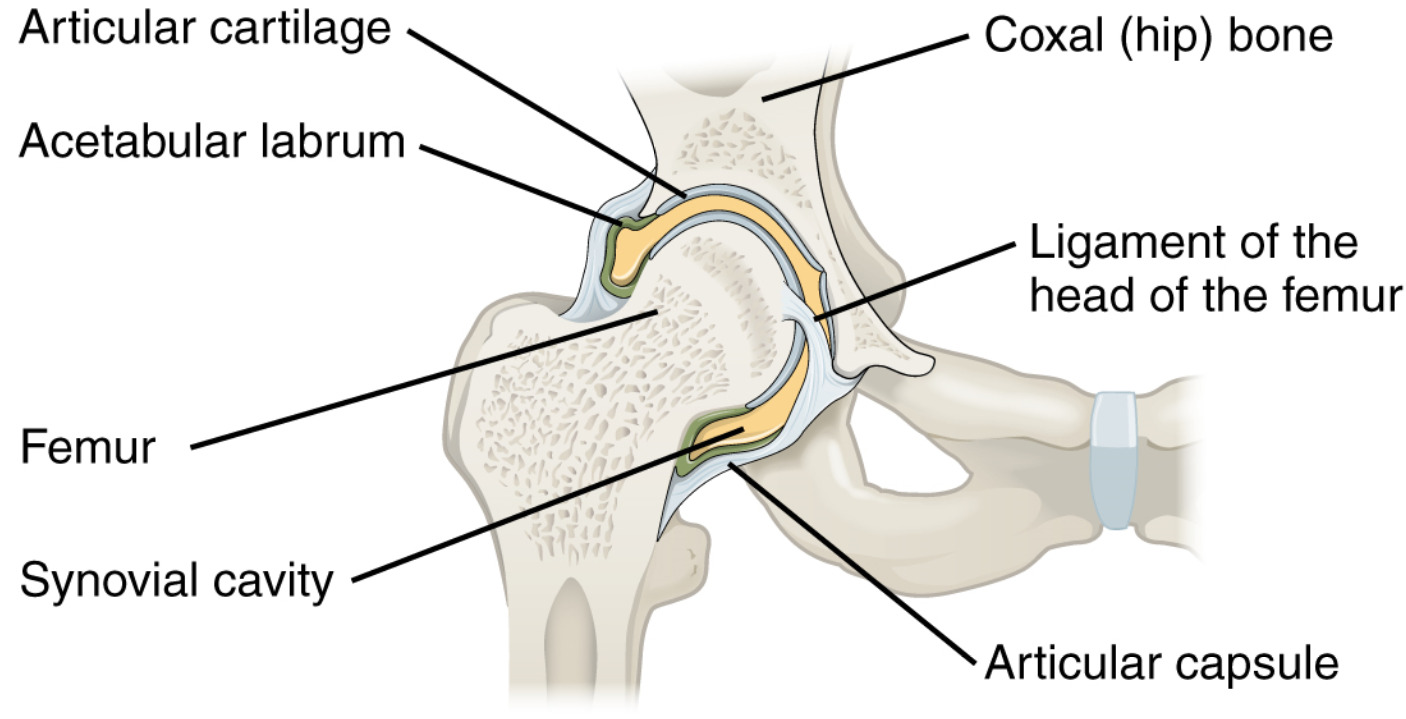
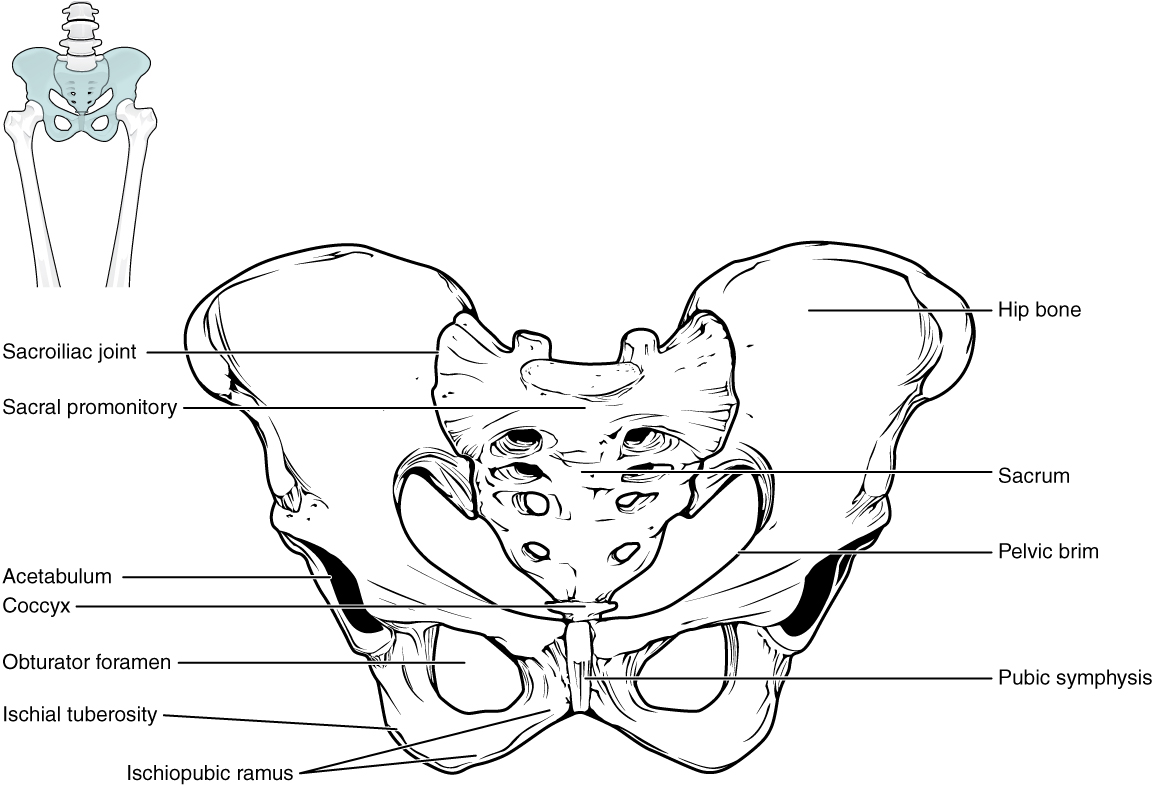
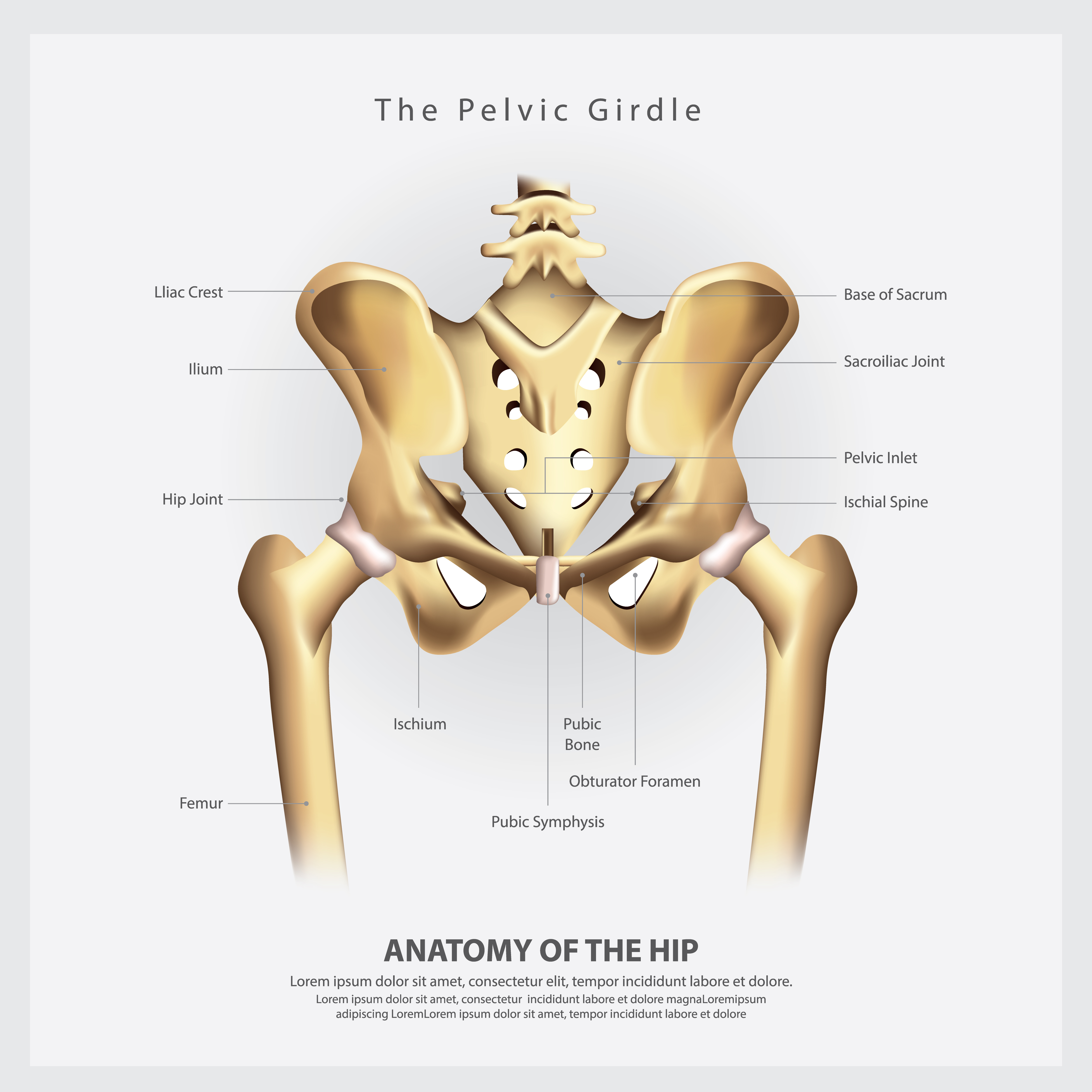
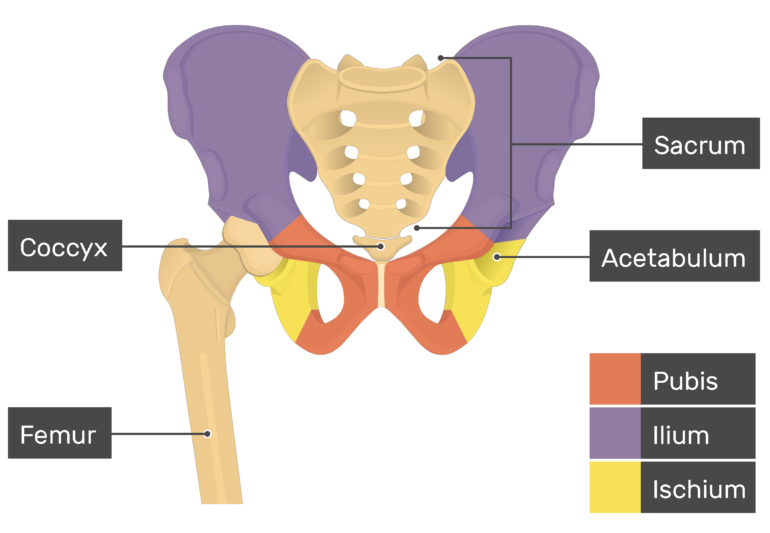
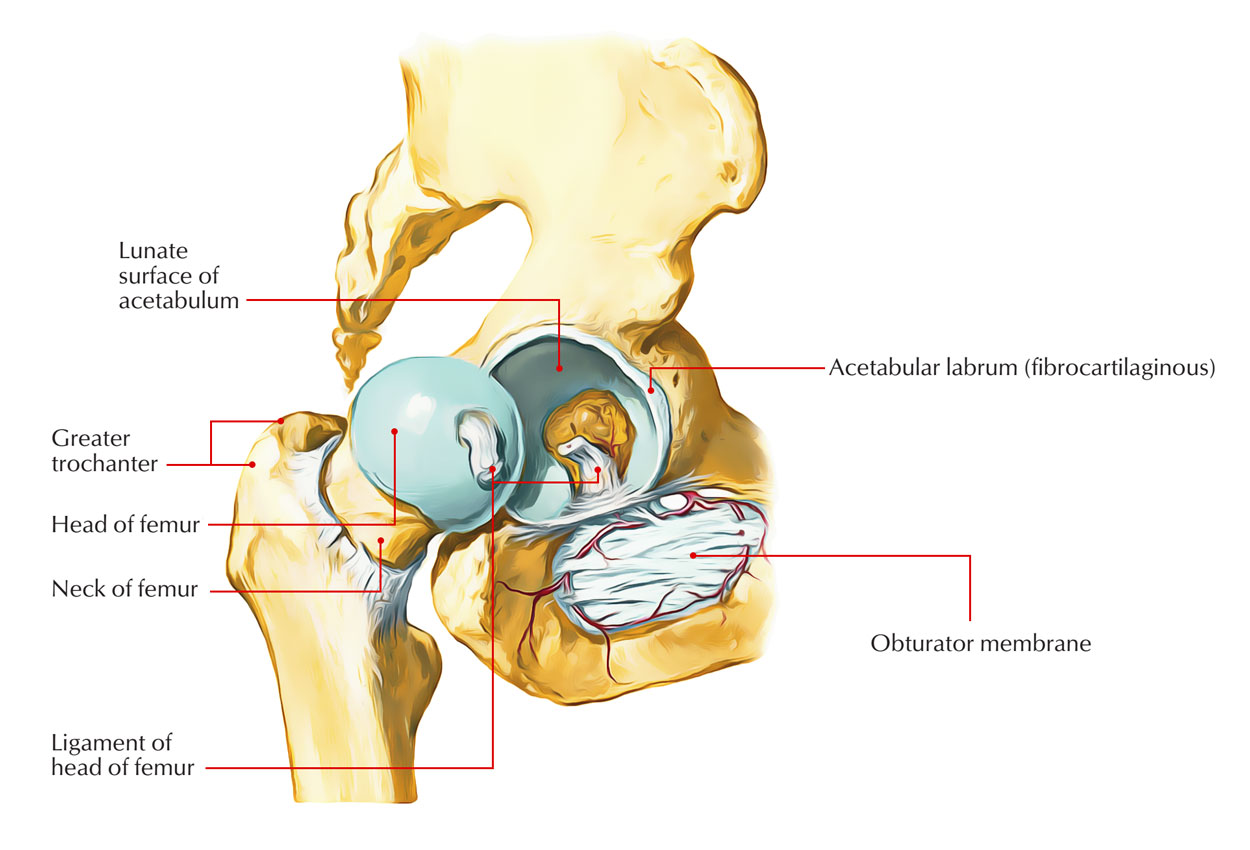
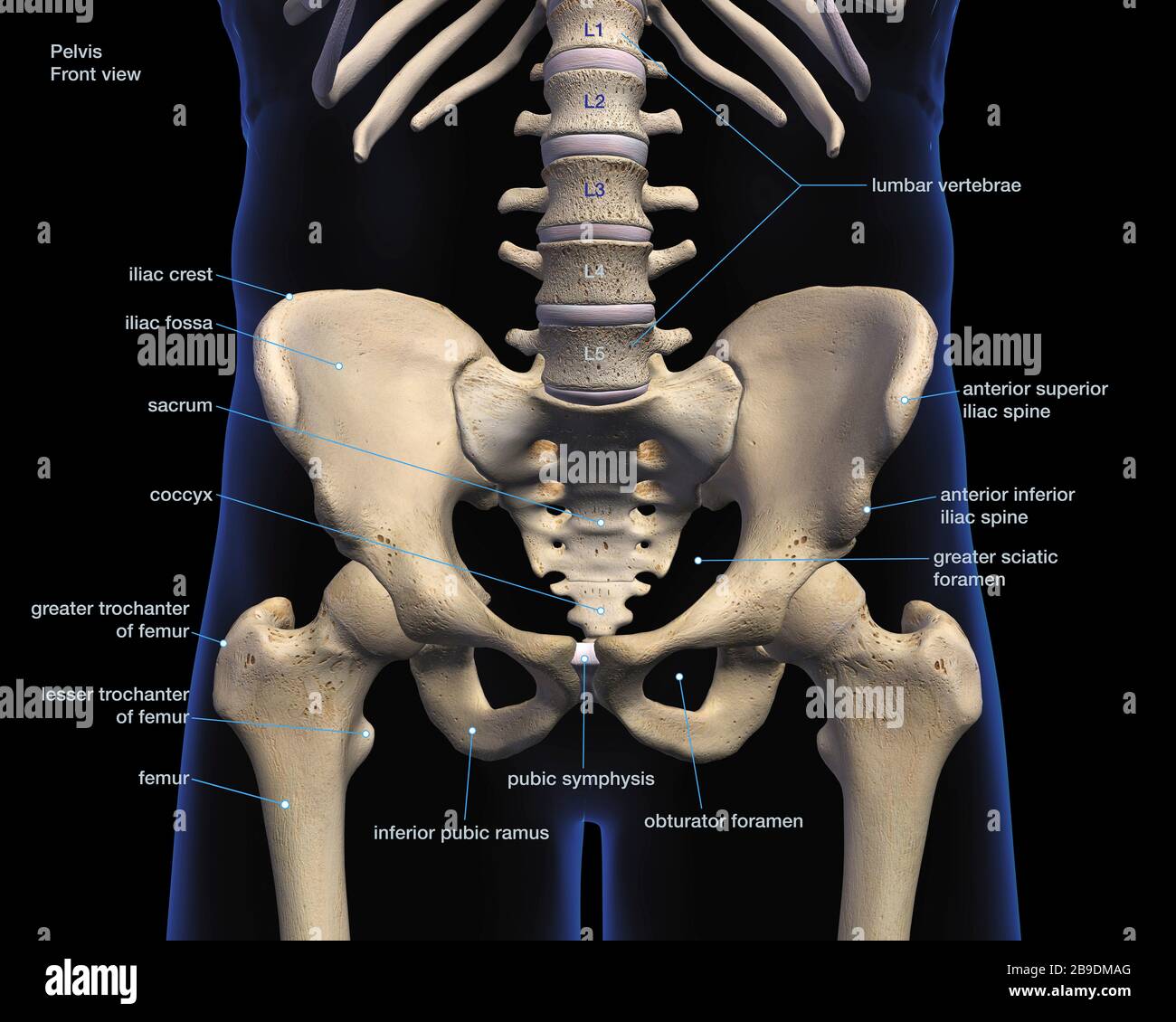
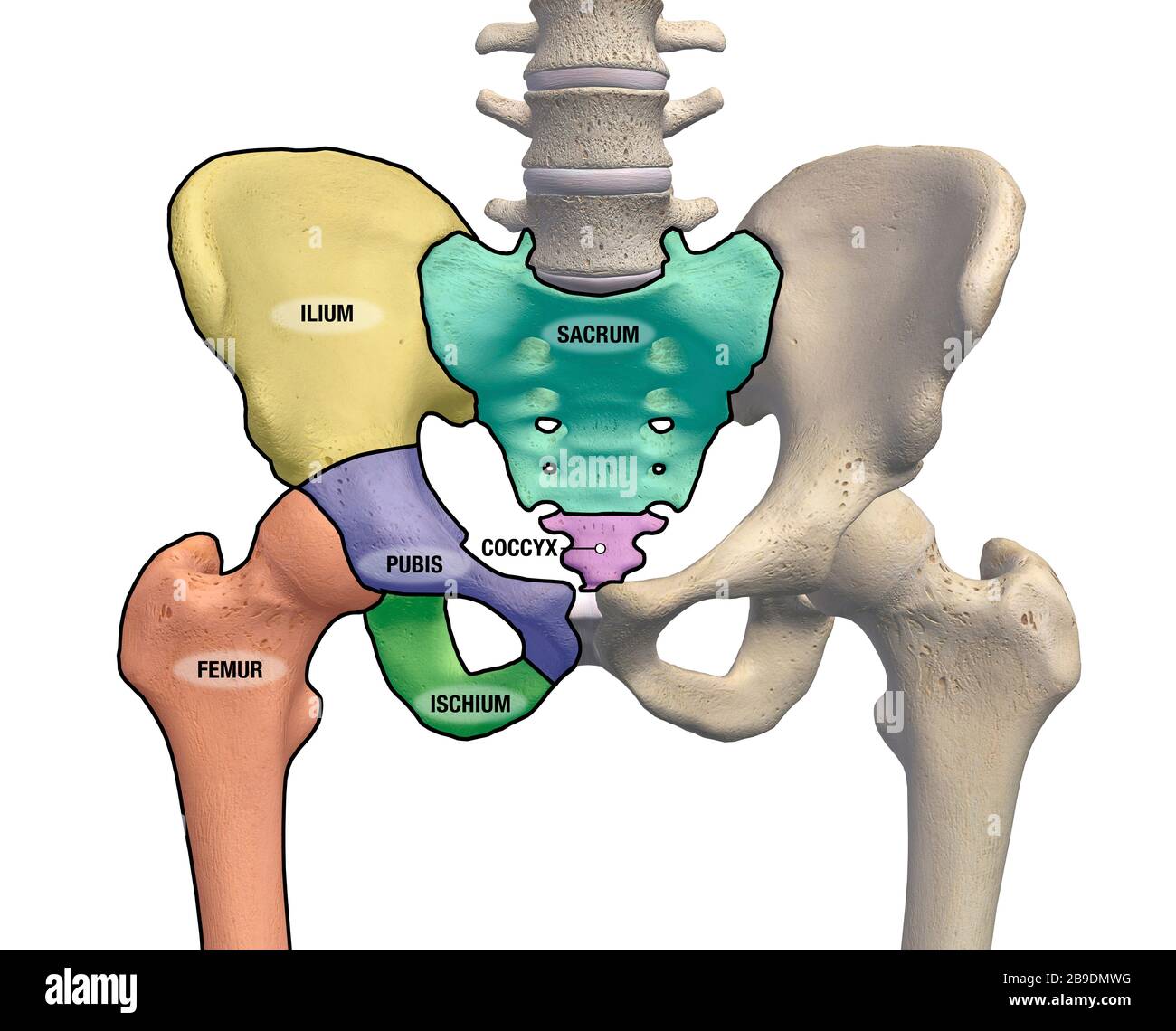
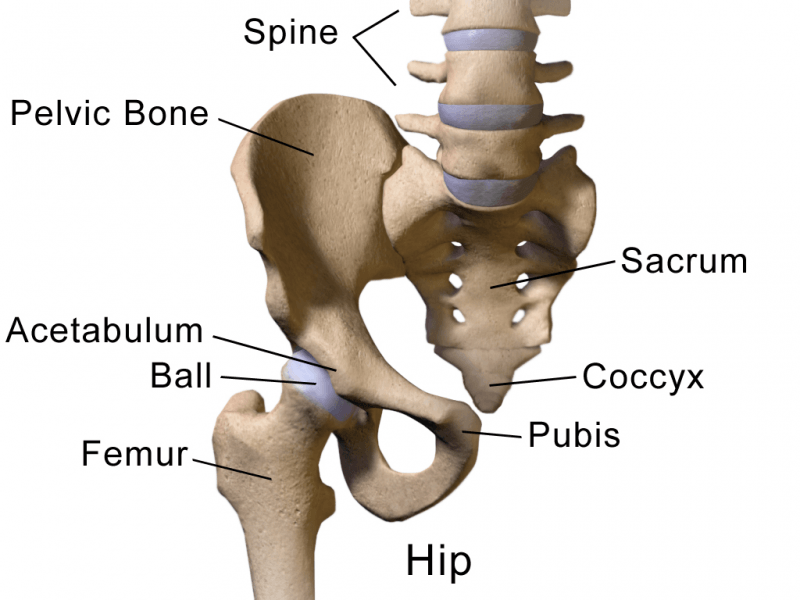
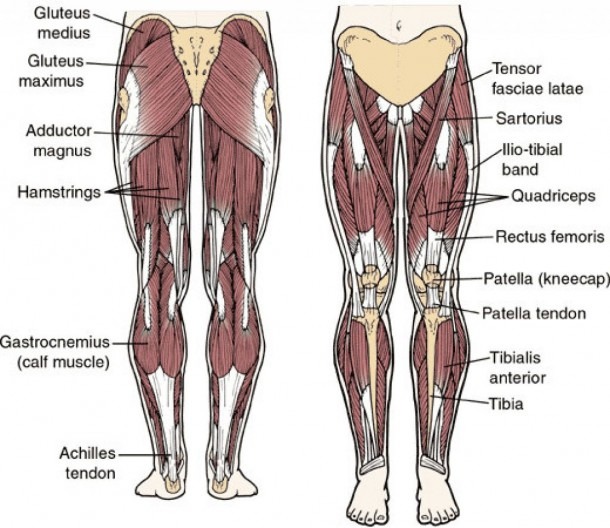
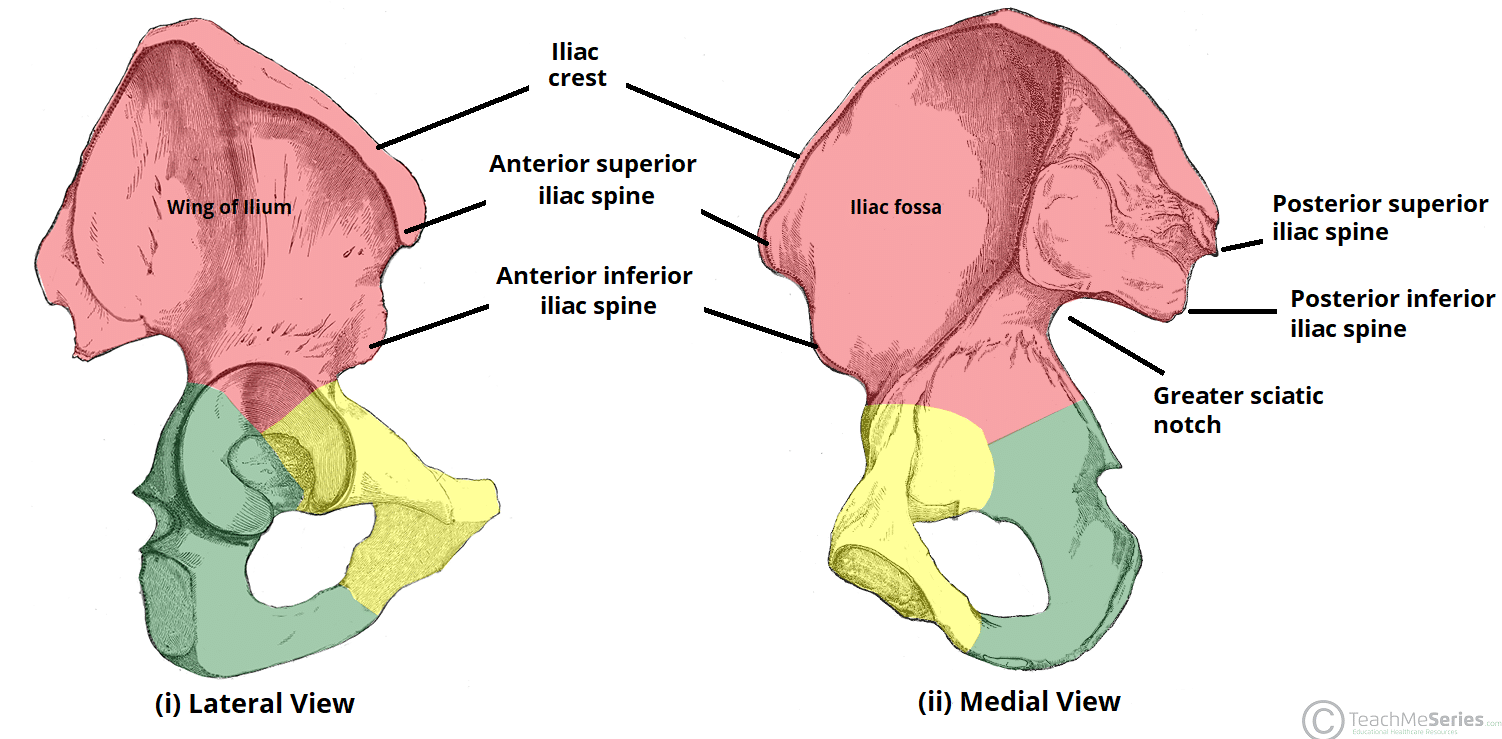
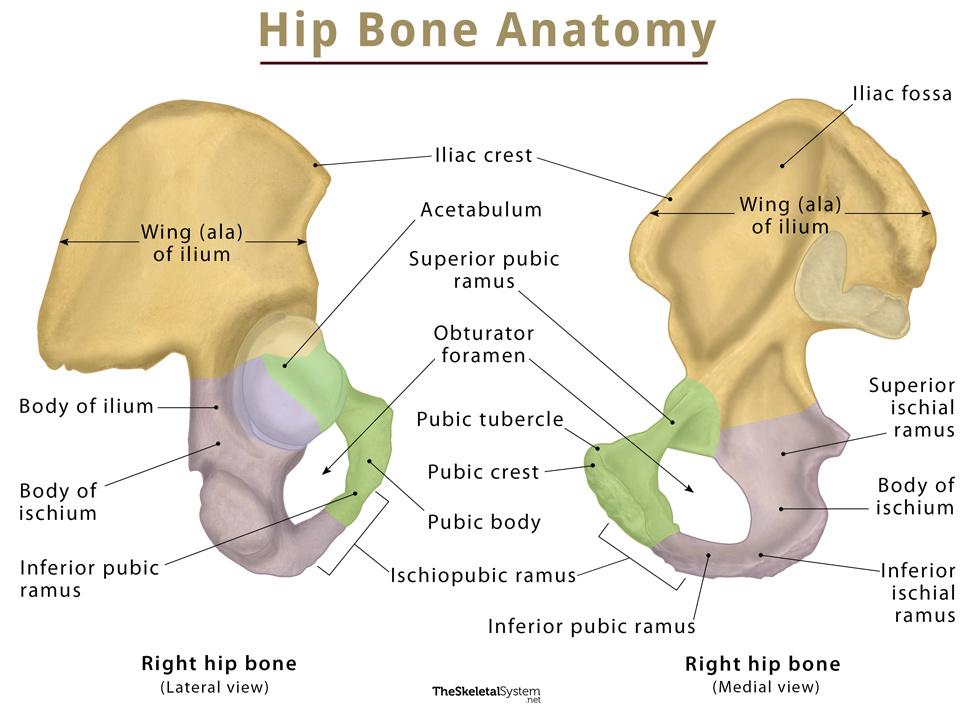
The hip joint is a ball and socket synovial joint, formed by an articulation between the pelvic acetabulum and the head of the femur.. It forms a connection from the lower limb to the pelvic girdle, and thus is designed for stability and weight-bearing - rather than a large range of movement.. In this article, we shall look at the anatomy of the hip joint - its articulating surfaces.. The strong muscles of the hip region also help to hold the hip joint together and prevent dislocation. Functionally, the hip joint enjoys a very high range of motion. The ball-and-socket structure of the joint allows the femur to circumduct freely through a 360-degree circle. The femur may also rotate around its axis about 90 degrees at the hip.








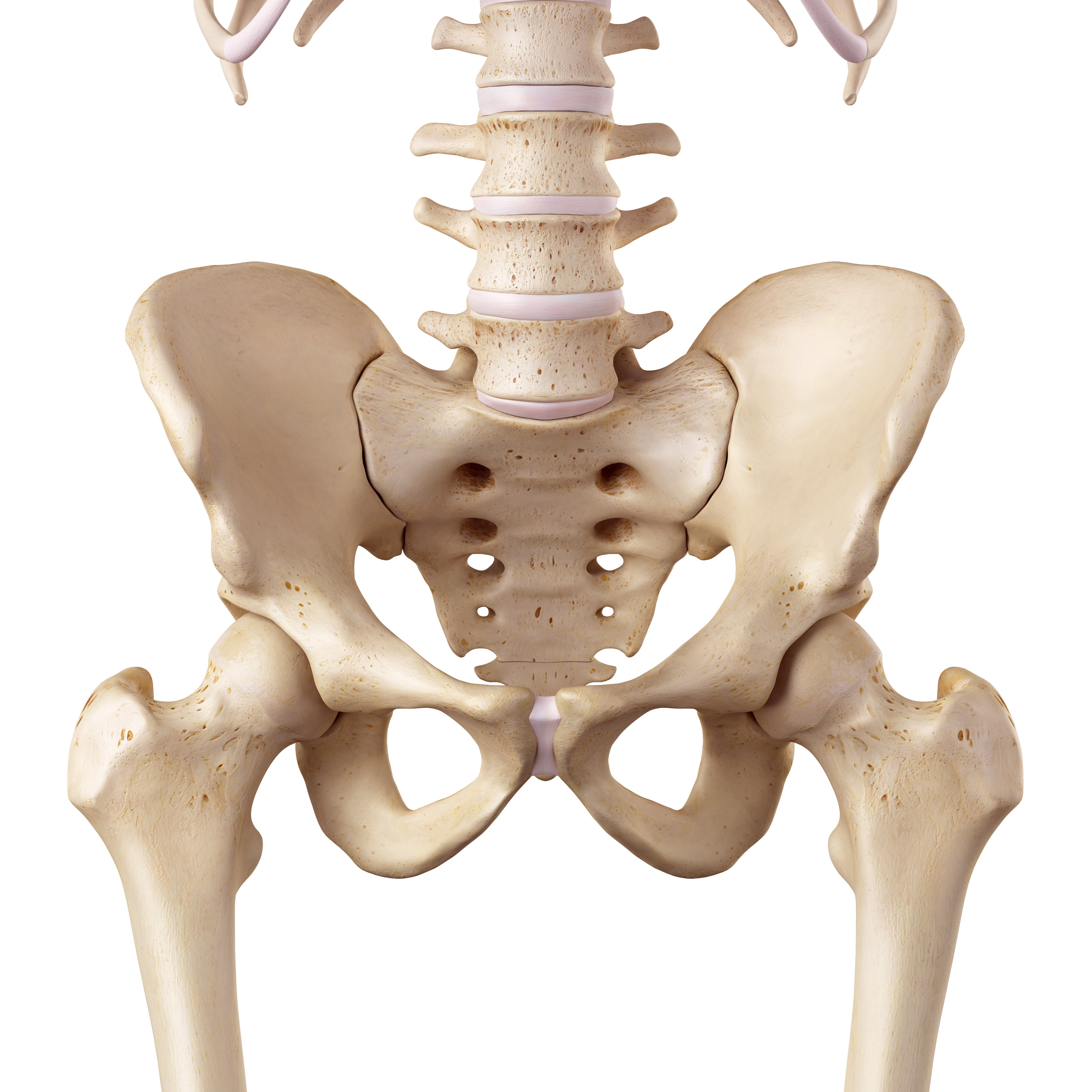

![[DIAGRAM] Diagram Of Hip Bone](https://cdn4.vectorstock.com/i/1000x1000/50/63/human-hip-bones-vector-19855063.jpg "[DIAGRAM] Diagram Of Hip Bone")

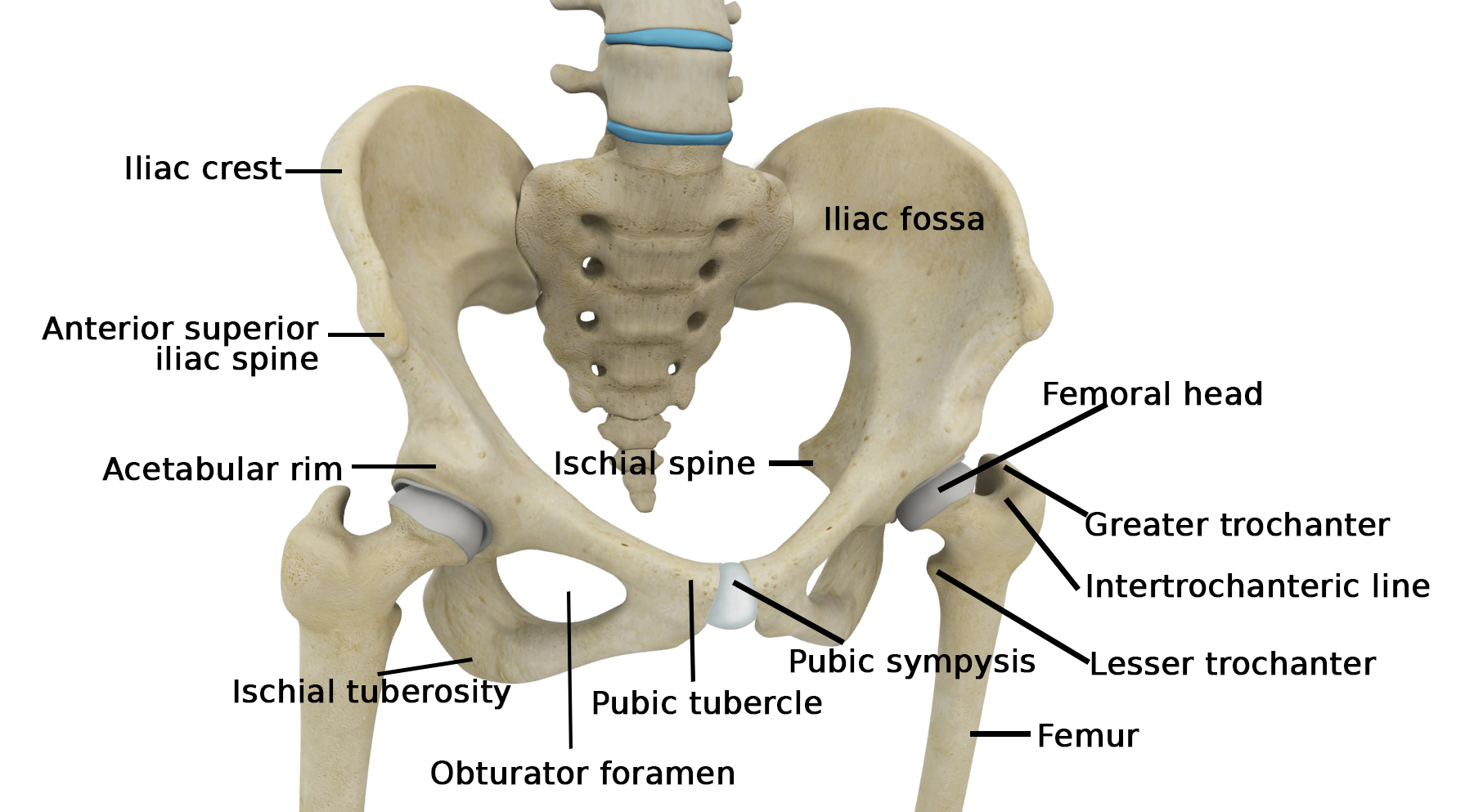

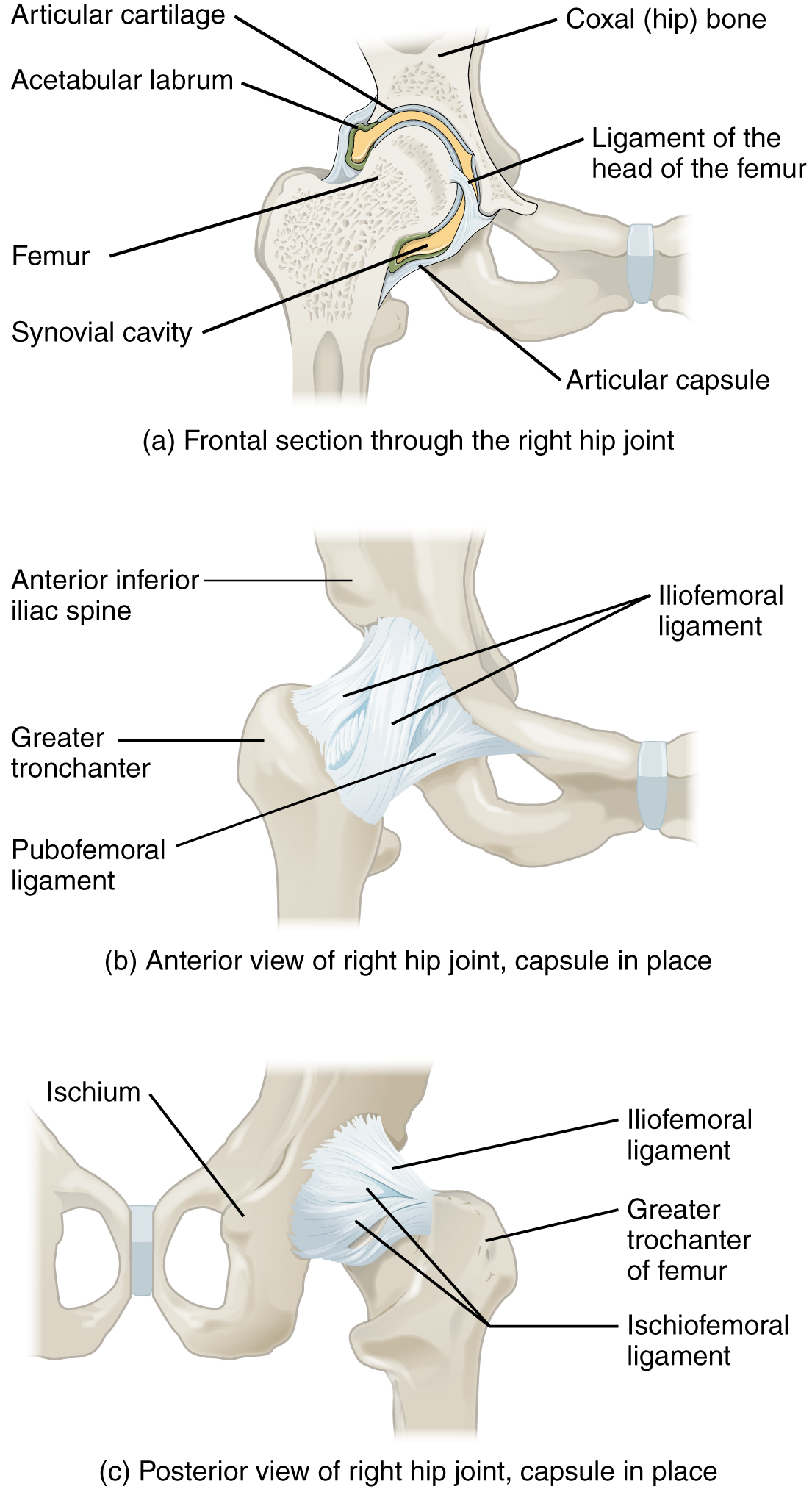
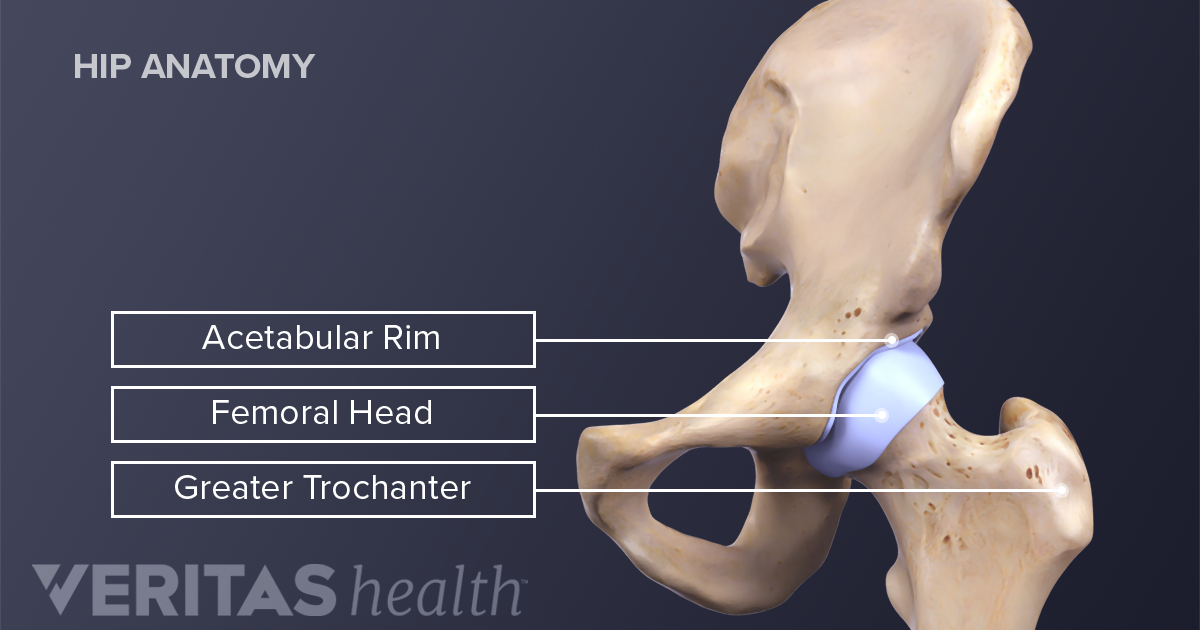

The hip joint connects the lower extremities with the axial skeleton. The hip joint allows for movement in three major axes, all of which are perpendicular to one another. The location of the center of the entire axis is at the femoral head. The transverse axis permits flexion and extension movement.. The hip is a ball-and-socket synovial joint that forms the connection between the pelvis and the lower limb. It is one of the most stable and weight-bearing joints in the human body, allowing for a wide range of motion while supporting the body's weight during movement and standing.[6]. Anatomy and Human Movement: Structure and Function (6th.